


















Calendar information for the sprint problems of the 26-27 academic year
- On the following Wednesdays:
- December 16, 2026: 3rd and 4th year of ESO
- January 20, 2027: 5th and 6th year of primary school
- February 3, 2027: high school
- February 17, 2027: 1st and 2nd year of ESO
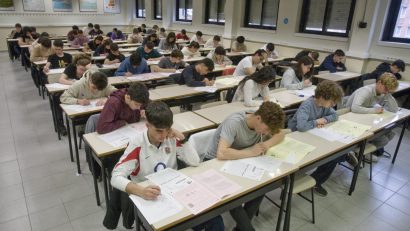
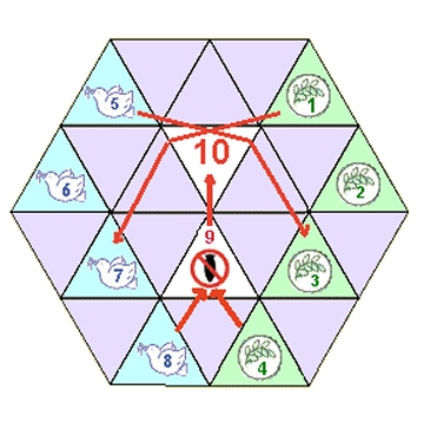
The contest Sprint Problems is a mathematical activity that was born to be held online in the year 2000, World Mathematical Year, within the framework of a contest called Relay Contest, aimed at school teams with the idea that through collaborative work they would reach the solution to the proposed problems. As the final act of the contest and linking with the award ceremony of the Cangur Contest this online contest was devised to be «as fast as possible».
Later, with the collaboration in the call by’ABEAM (and later FEEMCAT) and the support of the Department of Education (or Department of Education, now through Creamat) the scope of the proposal was expanded and currently each academic year there are four calls: for 5th and 6th year of primary school; for 1st and 2nd year of ESO; for 3rd and 4th year of ESO, and for high school.
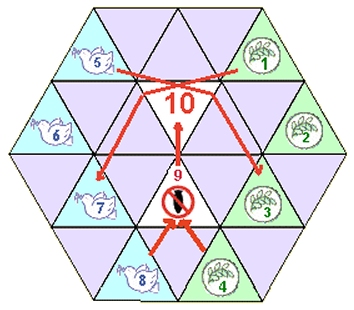
Teamwork, preferably organized in subgroups that must pass on answers to problems that are data for others, and the appropriate strategy are key to succeeding in the activity. It is worth noting that participation has steadily increased and it is interesting to note that, perhaps, the key idea is no longer finding the solution very quickly, but has become more like a popular problem-solving race, where the main goal is to finish successfully, striving to find the solution to all the challenges posed, dedicating as much time as necessary.
Attention!!! We are currently experiencing an intense debate about artificial intelligence, and specifically about its efficiency in finding solutions to mathematical problems. Following the idea of the approach with which the activity is designed, the Sprint Problems it seems important to us to comment that AI will undoubtedly have many implications in didactics in the future, but it does not fit at all with the approach of this contest, which requires reasoning and exchange of ideas specific to the team members. So, go ahead so that the teachers coordinating the activity encourage personal and collaborative analysis of the problems posed.